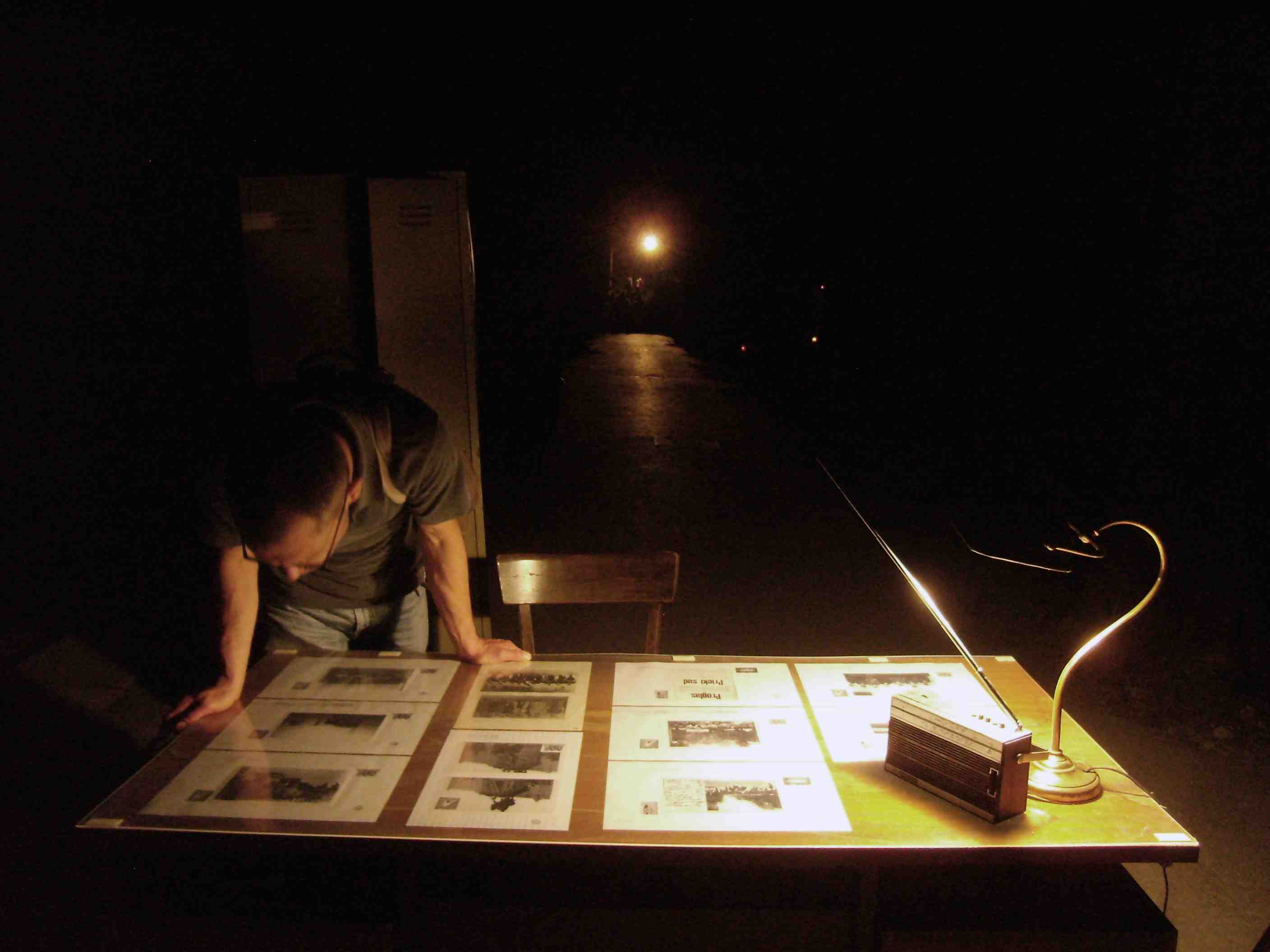
Tertulia was a large-scale art installation / performance that was executed in the Mirogoj Cemetery in Zagreb, Croatia. The project was a collaboration between visual artist Eduardo Molinari and composer Nicolas Varchausky, with technical work by Scott Carver and Michael McCrea. It was the central event at the 2009 Eurokaz festival. For more information, see Nicolas Varchausky’s project page.
Sound Environments
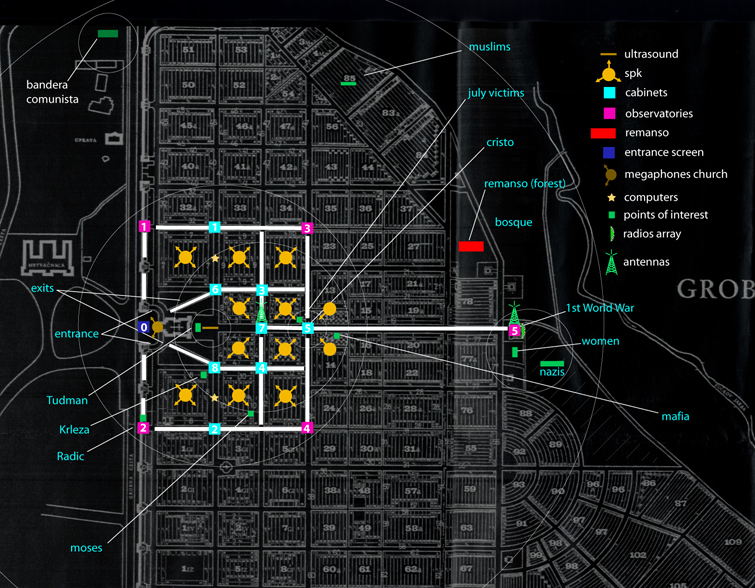
I worked closely with Nicolas Varchausky and Michael McCrea to design a selection of sound-spaces and spatial gestures that mapped, projected, and moved sounds through the multi-acre central quadrangle of the Mirogoj cemetery. These “fluxes” used a variety of both live-synthesized, as well as pre-recorded sound compositions, and flowed seamlessly together, stitching 15+ parts together over the multi-hour staging of the piece. Because of the unusual layout of the speakers and the broad scope of sounds used across the piece, we designed different spatialization models for each section, rather than forcing disparate sections into the same neutral layout. We created a “Behavior” class, a collection of spatial properties and behaviors of a sound over time. These were used as the core compositional units,
Speaker Virtualization
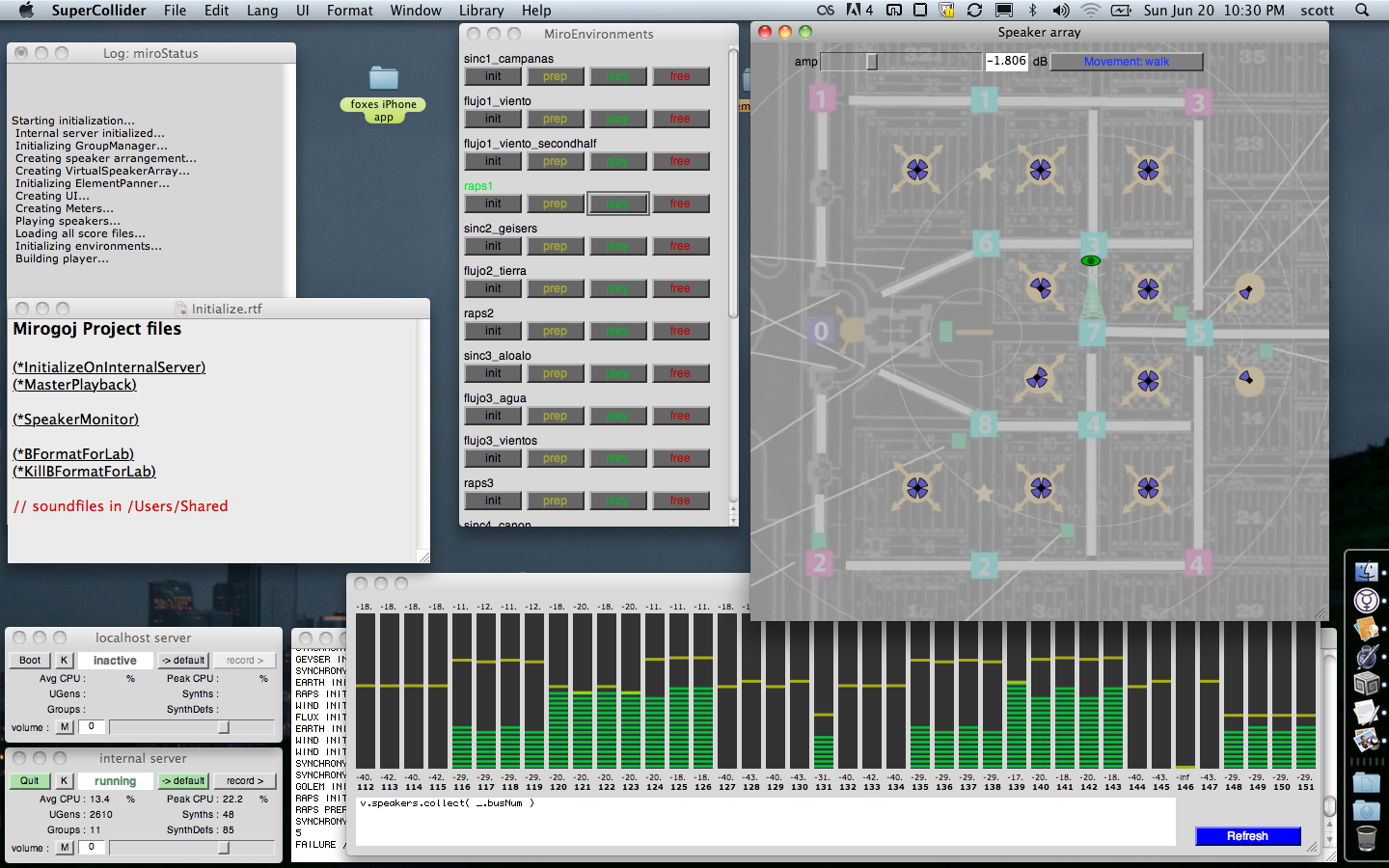
Because we had less than 24 hours in the cemetery itself for preparation, I designed a virtual version of the speaker array, adjusting delays, filtering, and other distance cue’s for each speaker and ambisonically mixing down to headphones or surround sound. Nicolas was able to compose all of the sections, as well as the spatial gestures and environments, on headphones or in a small studio, while listening to a realistic rendering of what they would sound like at any point along Mirogoj’s grid of paths.
Unified Playback Framework
The sections that made up the 3+ hour duration of the piece were composed over a period of several years, some as standalone pieces or for other contexts. This meant thousands of lines of code, written in radically different coding styles, using different software frameworks, toolchains, and patterns. To unify these elements to be played together in Tertulia, I created a simple framework for loading, cueing, modifying, and playing each section at performance time. As a result we were able to work on sections in isolation, fine-tune transitions, and even re-arrange the overall flow of the piece or hand-cue sections, all at performance time.
Technical specifications
The audio component of Tertulia was run on two Macbook Pro’s, each with a MOTU audio interface. Each laptop drove 20 of the 40 speakers - to ensure that the audio content was matched precisely, the computers had to be synced. In addition to precise clock syncing, each computers file structure, higher level panning, volume and event controls, and even the seed values for random number generators, had to be matched to ensure all speakers were coherent.
Publication
A paper detailing the technology behind the installation was presented at the Korean Electroacoustic Music Society Annual Conference in 2011. It was published in the KEAMS journal, EMILE:
Varchausky, Nicolás, Scott Carver, and Michael McCrea. “The Tertulia Project at Mirogoj Cemetery.” 에밀레 9.1 (2011): 81-91.